


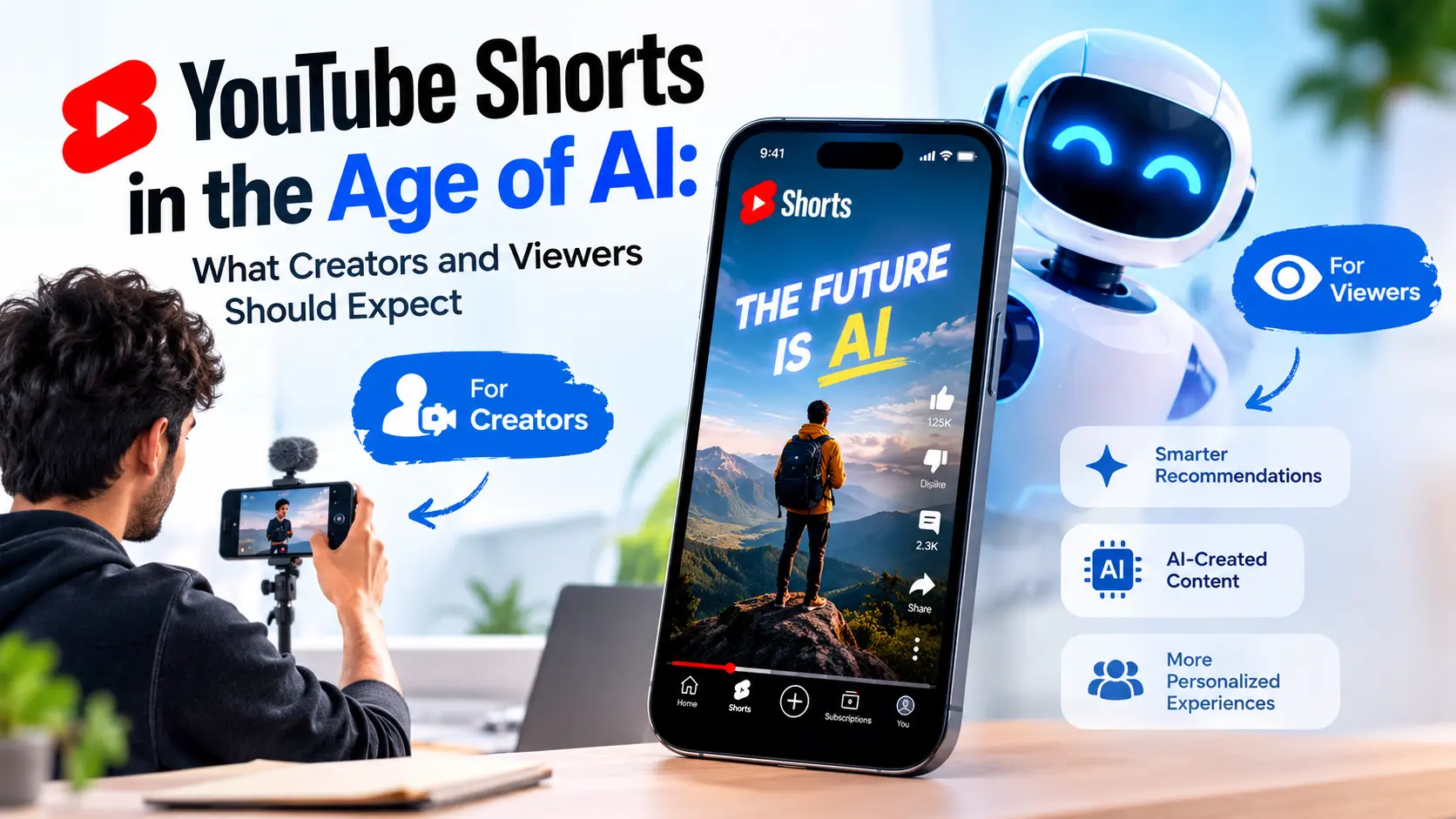
YouTube Shorts has made it easy to find a quick video for almost any mood or moment. Artificial intelligence could make that experience feel even more personal—but also raise new questions about how recommendations are chosen, what counts as original content, and how much control viewers have over their feeds. For creators and audiences alike, understanding the shift matters more than trying to predict every new feature.
How AI Could Change the Shorts Experience
Recommendation systems already help decide which videos appear in a viewer’s feed. As AI tools become more capable, platforms may be able to interpret a wider range of signals, such as viewing habits, topics, formats, and the context of a session. A person looking for cooking ideas might see a different mix of clips at lunchtime than during a weekend planning session.
That kind of personalization can make discovery more useful, especially when viewers are exploring unfamiliar interests. It can also create a narrower experience if the system repeatedly serves similar material. A feed that is convenient is not automatically a balanced one, so controls for shaping recommendations and finding new subjects will remain important.
The idea of a more AI-driven video platform is explored in what happens when YouTube becomes AI-Tube. The larger point is not that every video will be generated by a machine. Rather, AI may increasingly influence how videos are made, organized, recommended, and adapted to different viewers.
What AI Means for Creators
For creators, AI can help with routine parts of production. Tools can assist with captions, rough edits, idea development, translations, and versions of a clip formatted for different audiences. These uses may reduce repetitive work and help small teams publish more consistently.
But faster production does not guarantee a stronger video. A clear opening, a specific point of view, and an honest connection with an audience still take human judgment. If creators rely on generic scripts or mass-produce near-identical clips, viewers may lose interest even if the videos are technically polished.
Creators should also be thoughtful about accuracy and disclosure. AI-generated imagery or voices can confuse audiences when they appear to show real people or events. Reviewing outputs, correcting mistakes, and following platform rules are practical safeguards. The best workflow treats AI as assistance rather than a substitute for editorial responsibility.
Keeping Short-Form Content Distinctive
Short videos compete for attention, but chasing every trend can make a channel feel interchangeable. A useful approach is to define what viewers can expect from the account: a particular expertise, humor, visual style, or recurring format. Then use tools to make production more efficient without removing the qualities that make the work recognizable.
Before publishing, creators can check a few basics:
- Does the first moment make the subject clear? Viewers should quickly understand why the clip may be worth watching.
- Is the central claim accurate? Short formats leave little room for nuance, so avoid presenting a complicated topic as a simple certainty.
- Are captions and visuals easy to follow? Readability and clear audio help people watching in different settings.
- Does the clip offer something specific? A useful tip or fresh perspective is more memorable than a copy of a popular format.
These checks are valuable whether a video is edited manually or supported by AI. They keep attention on the audience rather than on output volume alone.
More Personalization, More Need for Viewer Choice
AI-powered recommendations may help people find niche creators, local interests, or topics they would not have searched for themselves. At the same time, viewers should be able to signal when a recommendation is irrelevant and deliberately seek variety. Exploring new channels, adjusting available recommendation settings, and taking breaks from endless scrolling can all make the experience more intentional.
Platforms also face a design challenge: personalization should not make it difficult to understand why something appears in a feed. Clearer explanations and accessible controls can help users distinguish between their own preferences and the system’s predictions. Trust depends not only on what an algorithm recommends, but on whether people can meaningfully influence it.
When Creators Need Extra Support
Publishing regularly involves more than filming. Creators may need help organizing footage, scheduling posts, researching topics, answering routine messages, or keeping track of performance. Delegating well-defined tasks can free up time for scripting and creative decisions, provided the creator retains oversight of the work and account access.
For those considering that kind of support, Osdire’s guide to hiring a virtual assistant offers a starting point for thinking about the process and costs. A freelance marketplace such as Osdire can be useful when comparing people for tasks like administrative support, writing, marketing, or video work. Before hiring, define the deliverables, agree on communication and deadlines, and avoid sharing more account access or personal information than the work requires.
Preparing for the Next Stage
AI will likely influence more of the short-video pipeline, from editing and translation to recommendation and discovery. The most useful response is to stay adaptable without treating every new tool as essential. Creators can test features on a small scale, review results, and keep audience trust at the center of decisions. Viewers can enjoy personalized discovery while staying curious beyond the feed.
YouTube Shorts will continue to change as technology and viewing habits evolve. AI may make videos easier to produce and recommendations more tailored, but quality will still depend on human choices: what to say, how to say it, and whether the result is worth someone’s attention.
