





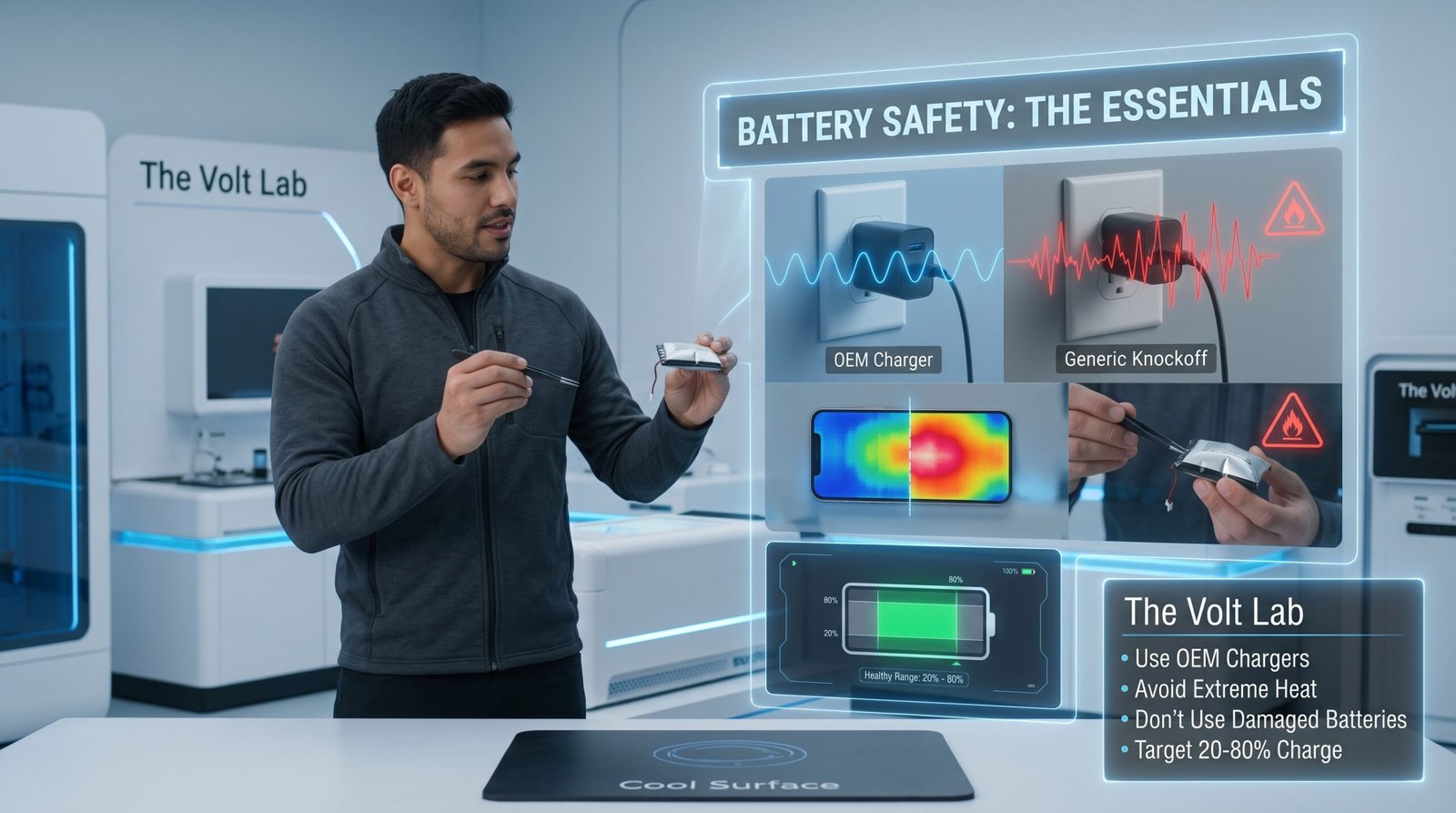
As consumer electronics become more powerful, our daily devices rely increasingly on high-density lithium-ion and lithium-polymer batteries. From flagship smartphones and ultrabooks to power stations and e-mobility devices, portable energy storage has revolutionized daily productivity. However, with higher energy density comes an inherent thermal risk if hardware isn’t managed correctly.
Understanding thermal management, safe charging standards, and proper battery hardware hygiene is essential for anyone managing modern consumer tech.
The Hardware Risks of Modern Fast Charging & Density
Modern fast-charging protocols (such as USB Power Delivery 3.1 and proprietary high-wattage charging standards) push significant current through battery management systems (BMS). While modern devices incorporate thermal throttling and overcharge protection circuits, external factors can degrade these protections over time:
- Thermal Trapping: Charging high-wattage laptops or smartphones under pillows, on bedding, or inside soft cases traps heat, causing thermal stress on battery cells.
- Uncertified Third-Party Accessories: Budget chargers often lack built-in isolation transformers, surge protection, or thermal sensors, increasing the risk of voltage spikes.
- Physical Cell Degradation: Micro-punctures or internal short circuits caused by dropped power banks or swollen battery cells significantly elevate thermal runaway risks.
Aligning Hardware Safety Habits with National Standards
Maintaining device longevity and hardware safety isn’t just a technical concern—it’s a critical safety habit at home, in schools, and across corporate environments.
To learn more about modern lithium-ion safety guidelines, official annual themes, and downloadable home inspection checklists, read the comprehensive guide on Fire Safety Week 2026: Dates (2026-2027), Theme & Checklist. Adopting standardized safety protocols ensures your hardware remains reliable without compromising workspace or home security.
4 Rules for Safe High-Wattage Charging Setup
- Verify Certification Marks: Always check charger bricks for official safety lab seals such as UL, ETL, or CSA. These marks confirm that the power supply meets strict voltage and thermal isolation standards.
- Charge on Flat, Non-Combustible Surfaces: Place power stations, e-bike batteries, and laptops on hard desks or concrete floors during active charging cycles to allow adequate heat dissipation.
- Inspect Swollen or Damaged Cells Immediately: If a power bank expands, shows bulging casing, or gets abnormally hot during low-wattage charging, disconnect it immediately and retire the device.
- Dispose via Certified E-Waste Channels: Never dispose of lithium-ion cells in municipal trash bins. Mechanical compactors in waste management trucks can puncture cells and ignite fires. Use specialized e-waste or battery recycling drop-off centers.
Protecting Your Tech Investment Through Prevention
Hardware performance and safety go hand in hand. By selecting certified charging hardware, monitoring device thermal levels, and adhering to modern battery handling guidelines, you protect both your expensive electronics and your workspace environment.


