





RubRankings.com is a mixed bag: it’s a real, operating directory with genuine user-submitted listings, but it also carries a documented history of upfront payment scams, fake profiles, and anonymous ownership. If you’re wondering whether rub rankings legit concerns are justified, it’s not an outright scam site in the “your money vanishes into a fake storefront” sense, but it’s also not a verified, regulated platform. Treat every listing as unverified until you’ve checked it yourself.
That’s the short version. The rest of this piece covers what most “is it legit” articles skip: how the scam pattern actually plays out, why trust-score tools disagree with each other, and how to tell a real listing from a fake one before you ever send a message.
What I Noticed While Checking RubRankings
When I looked into RubRankings, I quickly realized that a simple “legit or scam” label doesn’t tell the whole story. I compared the site’s visible information with trust-score reports, user discussions, listing patterns, and common payment-scam warnings. What stood out most was the gap between a functioning directory and the reliability of individual listings. That experience made one thing clear: with platforms like this, checking the specific profile, photos, reviews, payment requests, and available verification signals matters far more than trusting a single overall score.
Why Trust Score Tools Give You Different Answers


If you’ve searched around, you’ve probably noticed something odd: one article says RubRankings has a Scam Detector score of 30/100 (“medium risk”), while another cites a ScamAdviser score above 70% (“legitimate”). Neither number is wrong, exactly. They’re just measuring different things.
ScamAdviser
Leans heavily on technical signals: domain age, SSL certificate validity, hosting reputation, and whether the site has been flagged in phishing databases. A site can score well here and still be full of fake listings, because ScamAdviser isn’t reading the content, it’s reading the infrastructure.
Scam Detector
And similar tools weight things like WHOIS privacy, social proof, and complaint volume more heavily. A site using domain privacy (which RubRankings does) automatically loses points here, even if the privacy is unrelated to how listings are moderated.
So when someone quotes a single trust score as the answer, they’re giving you half the picture. A technically secure website (valid HTTPS, stable uptime, clean hosting) can still host user-submitted content that’s completely unmoderated. Those are two separate questions, and conflating them is where most competitor articles go wrong.
The Actual Scam Pattern, Step by Step
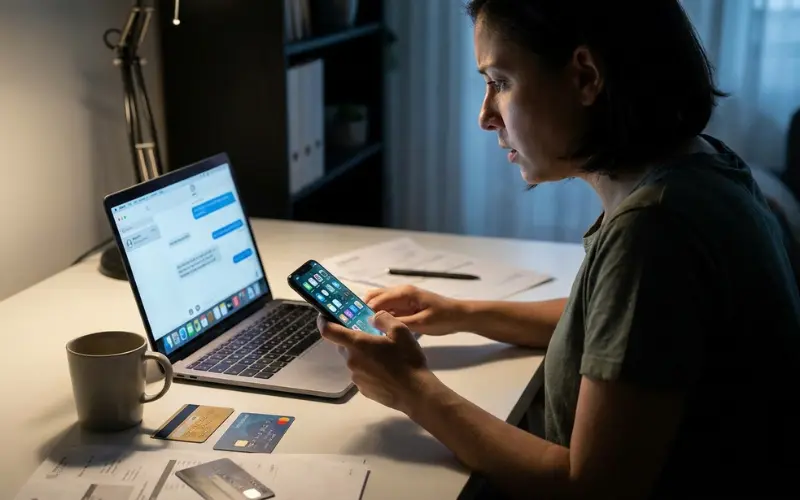
Most coverage of this topic mentions “upfront payment scams” as a vague warning. Here’s how it actually unfolds, based on patterns reported across Reddit’s r/Scams and multiple legal-advice forums:
- Contact looks normal. A listing responds quickly, often within minutes, which itself is a mild red flag since real independent providers are usually juggling their own schedules.
- The conversation moves off-platform fast. You’re pushed to text or a messaging app almost immediately, before any real vetting happens.
- A “deposit” or “booking fee” gets requested. Almost always through CashApp, Venmo, Zelle, or a gift card, all of which are irreversible once sent.
- Contact stops after payment. No refund path, no recourse, and the profile sometimes disappears entirely within a day or two.
- In a smaller number of cases, the situation escalates. Some users have reported follow-up messages threatening to expose the interaction unless further payment is made. This is a distinct and more serious pattern than a simple no-show, and it’s the one legal-advice threads treat most urgently.
Knowing which step to bail out at matters more than knowing the scam exists in general terms. Step 3 is your hard line. Any request for payment before a service has been rendered, on a platform with no payment protection or escrow, should end the conversation.
How to Spot a Fake Listing Before You Engage
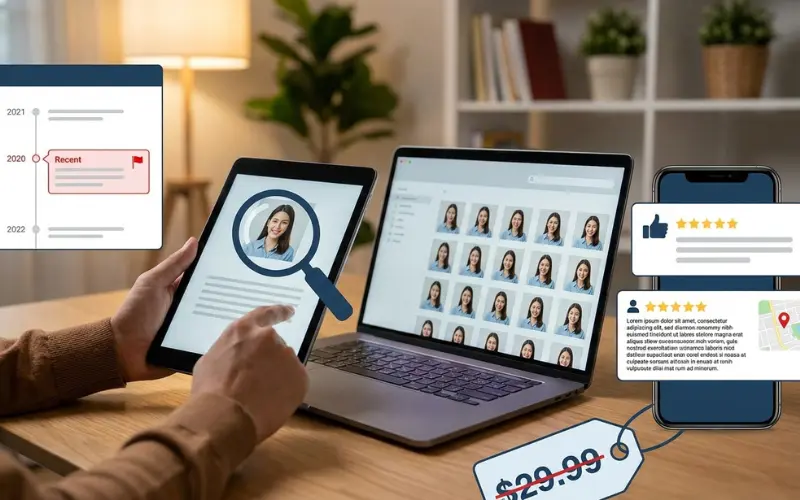
Competitor articles tell you to “verify independently” without saying how. Here’s what that actually looks like in practice:
- Reverse image search the profile photo. Fake listings frequently reuse stock photos or images lifted from other sites. A quick reverse search catches a large share of them in seconds.
- Check for a consistent posting history. Profiles that appeared within the last 24 to 48 hours, with no prior reviews or activity, carry more risk than long-standing listings.
- Read reviews for specificity, not sentiment. A review that says “great experience, highly recommend” tells you nothing. One that mentions a specific detail (location type, timing, communication style) is harder to fake at scale.
- Watch the pricing. Rates significantly below the local average are a common lure tactic. Scammers price low to get quick engagement, then pivot to the deposit request.
- Never let the conversation skip verification steps the platform does offer. If RubRankings has any in-platform messaging or review history, using it (rather than jumping straight to a personal number) at least leaves a trail.
If you want a broader look at how AI-assisted image and content verification tools work outside this specific niche, our breakdown of practical AI tools worth using covers reverse-image and content-checking tools in more general terms.
RubRankings vs. Similar Directories: A Quick Comparison
Several “rub” directories get lumped together in search results and reviews, but they aren’t the same operation. Here’s how the most commonly confused ones compare on the factors that actually matter for user safety.
| Platform | Ownership Transparency | Payment Handled On-Platform | Verification of Listings | Complaint Volume (Reddit/Legal Forums) |
|---|---|---|---|---|
| RubRankings.com | Anonymous (WHOIS privacy) | No | Minimal | Moderate, recurring scam pattern |
| RubMaps | Anonymous | No | Minimal | High, long-running complaints |
| RubRating.com | Anonymous | No | Minimal | Reported in legal-advice threads |
| MassageBook | Public, licensed therapist accounts | Yes, integrated booking and payment | Therapist license verification required | Low, standard business platform |
The pattern across the first three is consistent: no ownership transparency, no payment protection, and light-to-no listing verification. That’s not necessarily proof of malicious intent behind the platform itself, but it does mean the burden of verification sits entirely on the user, every single time.
What “Legit” Actually Means Here
This is the piece most articles gloss over: legitimacy isn’t one thing. A platform can be simultaneously:
- Technically legitimate (real company, working site, doesn’t steal your card details, doesn’t inject malware)
- Operationally risky (unmoderated listings, no recourse for bad actors, no payment protection)
RubRankings falls into the first category and not the second. That distinction is why some users report years of fine experiences while others report getting scammed on their first attempt. Both things can be true at once on a platform built around anonymous, user-submitted listings with no escrow system.
FAQ
1. What is Rub Rankings?
It’s an online directory where users post and browse listings for massage and body rub providers, along with a review system similar in structure to Yelp, but without the business verification Yelp requires.
2. Is RubRankings legit on Reddit?
If you’re wondering rub rankings legit according to Reddit discussions, threads, particularly in r/Scams, document real cases of upfront payment fraud tied to listings found through directories in this space. Reddit users generally treat the platform as unverified rather than outright fake, echoing the “proceed with caution” stance found elsewhere.
3. Can you get scammed on RubRankings?
Yes. The most reported pattern involves being asked for a deposit or booking fee through apps like CashApp or Venmo before any service takes place, after which the provider stops responding. This is an important consideration when asking whether rub rankings legit concerns are justified.
4. Is it illegal to use RubRankings?
Legality depends entirely on your local jurisdiction and what you use the platform for. Legitimate massage therapy is legal everywhere; anything beyond that varies by state and country law, and users are responsible for knowing their local regulations.
5. Does RubRankings verify its listings?
No formal verification process is documented. Listings are user-submitted, which is exactly why fake profiles and stock photos show up as a recurring complaint. This lack of verification is also why people searching rub rankings legit should independently check listings before trusting them.
6. What’s a safer alternative to RubRankings?
Platforms requiring licensed therapist credentials and handling payment on-platform, such as MassageBook, offer more accountability since providers are tied to verifiable licenses rather than anonymous profiles.
7. How do I report a scam I encountered through a listing site?
File a report with the FTC at reportfraud.ftc.gov, report the specific payment app transaction to that app’s fraud team, and if threats or blackmail were involved, contact local law enforcement since that crosses into criminal territory.
8. Why do trust score sites disagree about RubRankings?
Because they measure different things. Technical trust scanners check domain and hosting security; complaint-based scanners check user reports and ownership transparency. A site can pass one check and fail the other simultaneously.


