





Tricky Doors Walkthrough is a point-and-click escape room game from FIVE-BN Games where you search rooms for hidden items, combine them into tools, and solve environment-based puzzles to open a final door. This walkthrough covers the tools you need, how each puzzle type actually works, and where most players get stuck, without spoiling every single click for levels you’d rather solve yourself.
If you landed here because a specific level has you stuck, skip to the puzzle categories below. Most sticking points repeat across the game once you know what to look for.
What Tricky Doors Walkthrough Actually Asks You to Do
Each episode drops you into a themed location, a museum, a haunted castle, a drifting tanker, a Mayan pyramid, and gives you one goal: find the way out. There’s no timer and no fail state, so you can poke around every corner without pressure.
My take: the thing most guides skip is that Tricky Doors reuses a handful of mechanical “families” over and over. Once you’ve solved one lock-picking mini-game or one ingredient-mixing recipe, you’ll recognize the pattern three episodes later even if the skin is different. That’s the real shortcut, not memorizing 25 separate walkthroughs.
The game currently runs 25 released episodes, from Level 1 (Magic World) through Level 25 (Other World), with four more confirmed on the way: Snowy Cabin, Misty Haven, Prison Escape, and Underground City. It’s available free on Google Play, the App Store, Steam, and Nintendo Switch, with cross-platform releases on PC and Mac as well.
The Puzzle Types You’ll Face in Every Episode

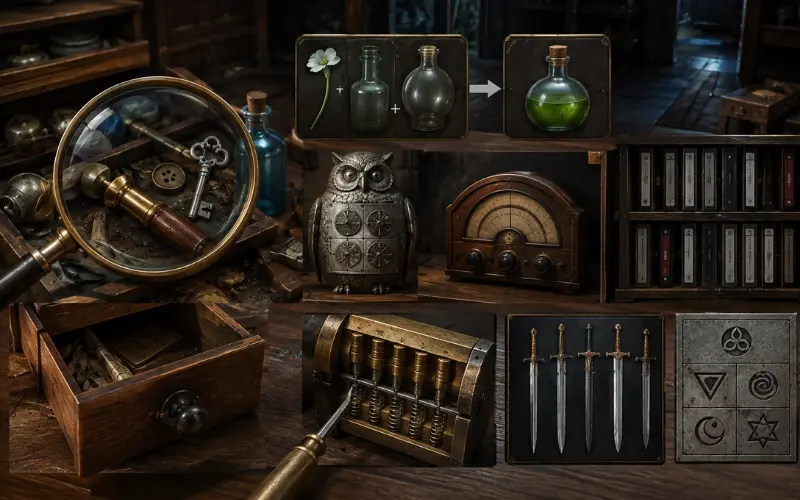
Instead of repeating the same explanation under every level, here’s what each recurring mechanic actually involves and how to approach it without a screenshot for every step.
Hidden object collection. Tools and ingredients are tucked into drawers, cracks, and background clutter. Tap everything that looks slightly out of place before assuming an item is missing. Nothing in Tricky Doors is decorative filler.
Item crafting. You’ll frequently combine two or three collected pieces (a handle plus a blade, a stem plus a bottle) to make a new tool. If an object in your inventory looks incomplete, that’s usually your cue to pair it with something else you’re carrying.
Sequence and code puzzles. Owl statues, radio dials, cassette shelves, and knob mechanisms all hide a code somewhere in the environment. Signs, paintings, and drawings you glance past on your first pass are almost always the answer key, so re-examine background art before guessing at a sequence.
Lock picking and mechanical puzzles. These are memory-based: lift or rotate the correct pins or dials in order, watch which ones hold, and repeat if you get it wrong. There’s no penalty for failed attempts, so treat trial runs as free information.
Environmental logic puzzles. Counting weapons on display, arranging cassettes by historical date, or matching symbols to backgrounds all reward slowing down and reading the clue text on-screen rather than clicking randomly.
Getting Started: Level 1, Magic World
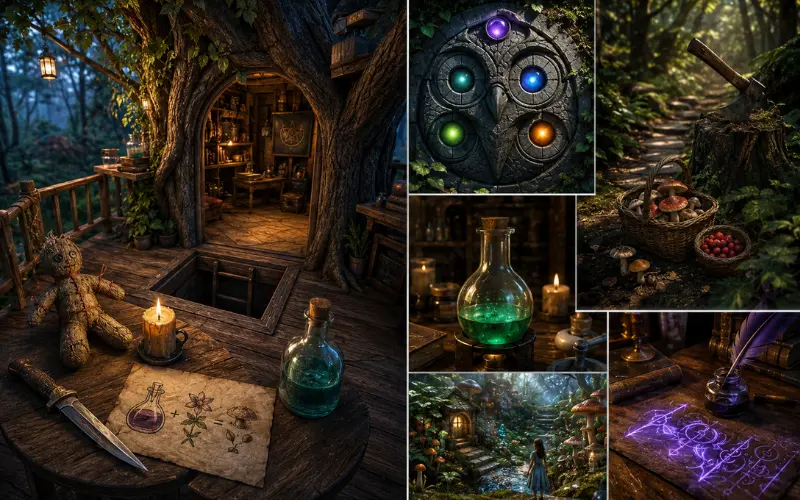
Since Level 1 is where nearly every new player starts, it’s worth walking through the shape of it without spoiling every micro-step. You begin in a treehouse room and need four keys to open a trapdoor in the floor. Collecting the keys also nets you a straw doll, a candle, a ritual knife, and a potion recipe, all of which matter later.
Outside, the forest section asks you to craft an axe, gather berries and mushrooms, and solve an owl-eye color sequence to unlock a hidden crystal. From there, the level alternates between the treehouse and forest as you brew a shrinking potion, enter a miniature world inside a bottle, and eventually write your way out using magic ink. It’s the longest onboarding puzzle in the game, and if you can clear it without a guide, most later levels will feel familiar rather than harder.
Later Levels Get More Mechanical, Not Just Bigger
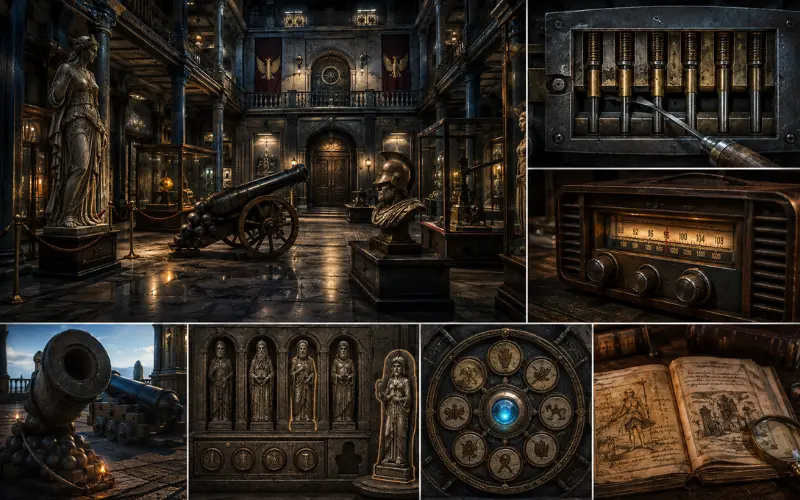
By the time you reach Level 6 (Museum), the game shifts from crafting-heavy puzzles toward multi-room mechanical challenges: lock picking, cannon operation, radio tuning, and statue assembly all show up in a single episode. The pattern holds through Levels 21 to 24 (Tropical Forest, Drifting Tanker, Haunted Castle, and Enchanted Woods), where the settings get more elaborate but the underlying puzzle families stay the same as what you learned in the first ten episodes.
If a specific late-game level has you stuck, check whether it’s a code puzzle first. Nine times out of ten, the number or symbol sequence you need is sitting in a sign, painting, or object you already walked past.
| Puzzle Type | First Major Appearance | What Solves It |
|---|---|---|
| Hidden object hunt | Level 1 | Tap every unusual detail in the room |
| Item crafting | Level 1 | Combine two incomplete inventory items |
| Sequence/code puzzle | Level 1 (owl eyes) | Re-check environmental clues, not guesswork |
| Lock picking | Level 6 | Memory-based trial and repeat |
| Historical/logic sorting | Level 6 | Read in-game clue text carefully |
The Hint System Most Guides Don’t Mention
Tricky Doors includes an in-app hint button, but hints are limited and cost in-game currency to refill, so leaning on a written walkthrough for the specific step you’re stuck on is usually faster than farming coins. Progress also syncs to your platform account, so switching between a phone and a tablet mid-episode won’t cost you what you’ve already collected, which matters if you’re the type to pick a puzzle back up on whichever device has your save synced</a>.
Platform Differences Worth Knowing
The core puzzles are identical across platforms, but controls change the experience. On mobile, everything is tap-based, which suits the fiddly item combinations well. On Steam and Nintendo Switch, you’re using a cursor or joystick instead of a finger, so precision puzzles like lock picking take a little longer to get used to. None of it changes the solutions, only the input method, and it’s part of why like this one have found an audience well beyond dedicated gamers.
Frequently Asked Questions
How many levels does Tricky Doors Walkthrough have?
The game currently has 25 released episodes, with four more (Snowy Cabin, Misty Haven, Prison Escape, and Underground City) confirmed as upcoming additions.
Is Tricky Doors Walkthrough free to play?
Yes. It’s free on Google Play, the App Store, Steam, and Nintendo Switch, with optional in-app purchases for hint currency.
Does Tricky Doors Walkthrough have a time limit on puzzles?
No. There’s no timer and no way to fail a level, so you can examine every screen at your own pace.
Is Tricky Doors Walkthrough available on Nintendo Switch?
Yes, it released on Switch in May 2022, followed by a Steam release in October 2023, alongside the existing iOS and Android versions.
Why can’t I find the code for a puzzle even after searching the room?
Codes are almost always hidden in something you’ve already seen but dismissed, a sign, a painting, or a drawing, rather than a new item you haven’t found yet. Revisit background details before assuming an item is missing.
Do I need to replay earlier levels to unlock later ones?
No. Episodes are self-contained locations, so you can jump into any released level independently without finishing the ones before it.
Can I play Tricky Doors Walkthrough offline?
Yes, gameplay works offline once the app is installed, though hint purchases and cloud sync require a connection.
Is Tricky Doors Walkthrough appropriate for kids?
It carries an Everyone 10+ style rating with light horror theming in a few episodes (the haunted castle and vampire’s castle levels, for example), so it suits most tweens and up rather than very young children.


